Lesser-Known Vegan Dishes from West India
- May 25
- 10 min read
West India runs on chickpea flour, mustard seed, kokum, and coconut. From Mumbai's sprouted-bean street food to Gujarat's steam-and-temper technique to Goa's coconut-curry coastal cooking — and the Sindhi kitchens that bridge them all — the cuisines of the western states are some of the most plant-forward in India.
This is part three of a four-part field guide to lesser-known vegan dishes across India's regional cuisines. Part one covered South India — coconut, lentils, tamarind, and coastal abundance. Part two covered East and Northeast India — mustard oil, fermentation, and indigenous greens. West India sits between them culturally and bridges them culinarily, with techniques that overlap both directions.
Fifteen dishes across four regions: Maharashtra and the Konkan coast, Gujarat, Goa, and Sindhi cuisine (now mostly cooked in Maharashtrian and Gujarati households after partition).
For the philosophical and historical backdrop on why so many Indian regional cuisines are naturally plant-based, see the earlier piece on veganism in India's cultural and historical roots.
Maharashtra and the Konkan Coast
Maharashtrian everyday cooking spans the dry hot Deccan plateau, the coastal Konkan strip, and the urban food culture of Mumbai and Pune. Chickpea flour is the underlying ingredient in nearly every regional dish.
1. Misal Pav
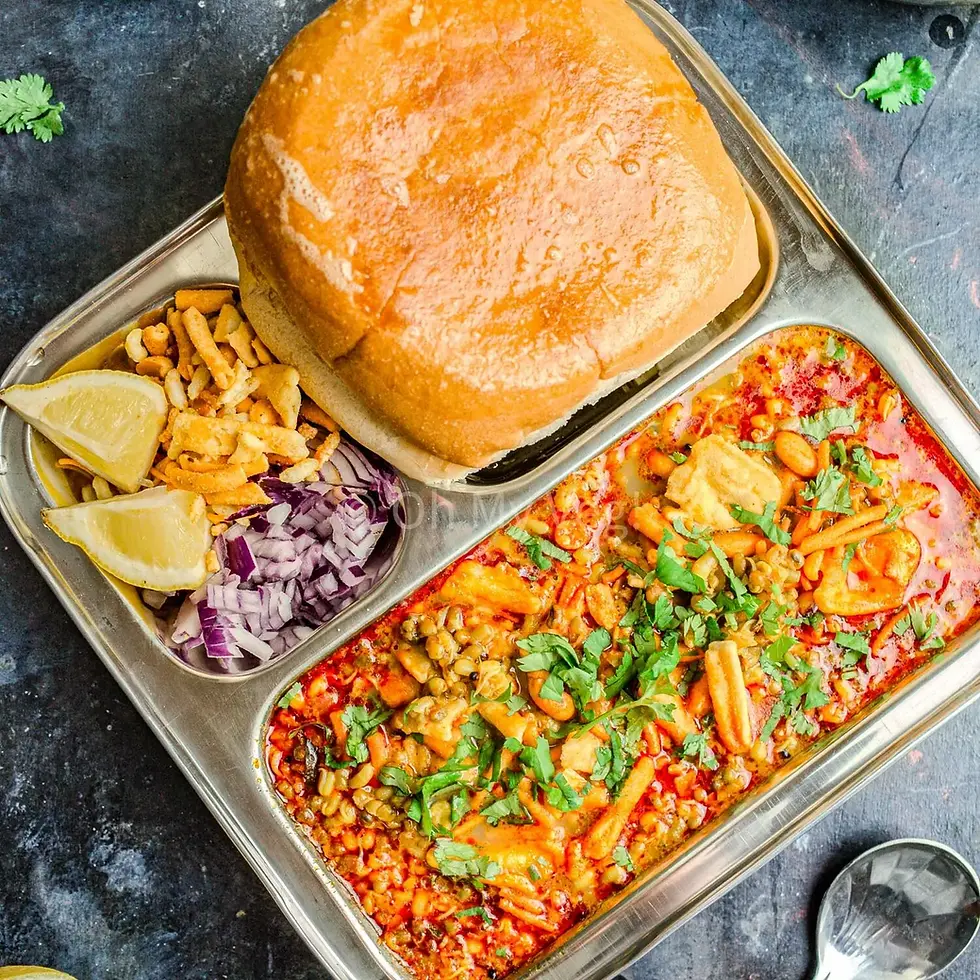
The defining Maharashtrian street food. Sprouted moth beans (matki) are cooked into a deep red-brown spicy gravy with a layer of red oil floating on top. Served in a wide bowl with chopped onion, fresh coriander, a wedge of lemon, and a side of farsan — savoury fried snacks crumbled over the top — plus two pav (soft white bread rolls) for soaking.
The dish has regional variants. Pune misal is mild; Kolhapuri misal is brutally hot; Nashik misal is sweeter; Mumbai misal sits somewhere in between. The sprouted bean base is what makes it distinct from any other Indian curry — the sprouting changes the texture and the nutritional profile entirely.
Naturally vegan when the pav is dairy-free, which most street stall versions are.
2. Pithla Bhakri
The everyday Marathi meal. Pithla is a thick chickpea-flour porridge cooked with hot water, mustard seeds, hing, green chilli, onion, and turmeric until it thickens into a dense, savoury base. Bhakri is the accompaniment — a hand-pressed flatbread made from jowar (sorghum), bajra (pearl millet), or sometimes rice flour, cooked on a hot tawa until crisp at the edges.
The combination is the working-class staple of rural Maharashtra. Bhakri provides the slow-burning carbohydrate; pithla provides protein and structure. Eaten with a slice of raw onion, green chilli, and a pinch of salt. Nothing else is needed.
3. Sabudana Khichdi
A fasting-day dish that has become an everyday breakfast across Maharashtra. Soaked sago pearls (sabudana) are stir-fried with roasted peanuts, cumin, green chilli, turmeric, and curry leaves. Boiled potato cubes are folded in, and the dish is finished with lemon juice and fresh coriander.
The technique matters. Sago has to be soaked just long enough that the pearls become tender but not so long that they collapse into a sticky mass. The peanuts must be roasted and coarsely crushed for texture contrast. When cooked properly, sabudana khichdi has a light, separate-grain quality with bursts of peanut crunch.
Traditionally cooked in ghee for religious fasting days — substitute groundnut oil for a fully plant-based version that loses nothing of the flavour.

4. Thalipeeth
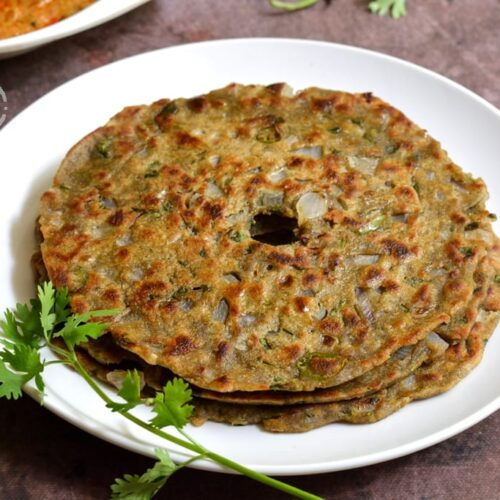
A multi-grain flatbread that has no analogue in any other Indian cuisine. The dough is mixed from a blend of millet (jowar), bajra, chickpea flour, rice flour, wheat flour, and sometimes urad flour — at least five flours together. Onion, coriander, sesame, ginger, green chilli, and ajwain are kneaded directly into the dough.
The technique is hand-pressing rather than rolling. The dough is pressed thin onto a hot tawa with wet fingers, cooked with a drizzle of oil on top until both sides are golden and slightly crisp. The multi-flour composition gives it a complex, almost nutty flavour that single-grain flatbreads can't match.
Served with a wedge of pickle, a bowl of curd (or vegan yoghurt), or simply a spoonful of mustard oil. Naturally vegan, naturally gluten-leaning-low (depending on flour ratio), and one of the most nutritionally complete flatbreads in Indian cooking.
5. Amboli
A Konkani Maharashtrian preparation — a fermented rice-and-urad-dal pancake similar in concept to a dosa but distinctly Konkani in execution. The batter is left to ferment overnight, then cooked into a thicker dosa on a hot tawa and served with coconut chutney or vegetable curries.
The texture is softer and spongier than a dosa, with a slightly tangy note from the longer fermentation. Amboli is the breakfast staple of coastal Konkani households — naturally vegan, naturally fermented, and almost never found outside the Konkan region.
Gujarat
Gujarati cuisine is one of the most ingredient-precise of all Indian regional traditions. The state's cooking is overwhelmingly vegetarian, and a significant portion is naturally vegan. Chickpea flour (besan) is the structural workhorse; steaming, tempering, and the sweet-sour-spicy balance define the flavour profile.
6. Patra
Colocasia (taro) leaves stacked, smeared with a tangy gram flour paste seasoned with tamarind, jaggery, ginger, and green chilli, then rolled tightly into a long log, steamed, sliced, and finally pan-tempered with mustard seed and sesame.
The dish is fundamentally architectural. The chickpea flour paste binds the leaves; steaming sets the structure; tempering builds the final flavour. Patra is naturally vegan and commonly eaten across Gujarat as a tea-time snack or part of a thali.

7. Surti Sev Khamani
From Surat, the southern Gujarati port city. A crumbled, soft-set chickpea preparation made by partially cooking chana dal, then crumbling it loose, then layering it with garlic, ginger, green chilli, coriander, lemon, pomegranate seeds, and a generous shower of sev (gram flour noodle topping).
The dish sits somewhere between a salad and a snack. Bright, sharp, herbaceous, and entirely plant-based. Eaten with a fresh-baked Surti khari biscuit or as a street-food bowl. Khamani's contrast — the soft dal against the crisp sev against the pop of pomegranate — is what makes it distinctive.
8. Dhokla
The most internationally known Gujarati dish is often misunderstood as a fried snack. It is steamed. A batter of fermented gram flour, sour curd (or buttermilk in traditional versions, lemon juice in vegan ones), and a leavening agent is poured into a tray, steamed for 15 minutes, then cooled and cut into squares. Finished with a tempering of mustard seeds, curry leaves, green chilli, and a sprinkle of grated coconut.
The traditional version uses dairy curd. The vegan version uses lemon juice or vinegar — and tastes essentially identical because the curd's main contribution is acidity, not dairy character.
Light, spongy, mildly tangy, and naturally probiotic. One of the most thoughtfully constructed snacks in Indian cuisine.

9. Khandvi
A demanding preparation that produces one of Gujarat's most distinctive dishes. A thin batter of gram flour, water, ginger, and salt is cooked on the stove while stirred constantly until it reaches a precise smooth, glossy consistency. The hot batter is spread thin on a flat surface, allowed to cool for one minute, then rolled into tight pinwheel rolls and sliced.
The whole technique fails if the batter is over-cooked, under-cooked, or spread too thick. Done correctly, khandvi has a delicate, almost translucent quality that no other Indian dish replicates. Finished with mustard seed, sesame, and a few fresh curry leaves tempered in oil.
Naturally vegan. Among the most technique-dependent dishes in Indian home cooking.
Goa
Goan cuisine has two distinct streams — the Catholic Goan tradition, with strong Portuguese influence and a significant focus on fish and pork, and the Hindu Goan tradition, which is overwhelmingly plant-based. The Hindu Goan kitchen is one of the most underrepresented coastal cuisines in mainstream Indian food coverage.
10. Khatkhate
A traditional Hindu Goan festive dish. Five to seven seasonal vegetables — drumstick, raw papaya, pumpkin, sweet potato, ash gourd, plantain — are cooked with toor dal and a ground coconut-spice paste of cumin, peppercorn, coriander seed, and dried red chilli.
The dish has no tempering at the end; the flavour is built entirely from the coconut paste and the slow cooking. Khatkhate is served on Hindu Goan festive occasions like Ganesh Chaturthi and most major family celebrations. Naturally vegan and rarely found outside Goan homes.
11. Mushroom Xacuti
Xacuti (pronounced sha-koo-tee) is a Goan coconut-and-spice gravy traditionally cooked with meat. The vegan version uses mushrooms — typically button or oyster — and produces a remarkably similar result because mushrooms absorb the deeply spiced coconut gravy like meat does.
The spice paste is the signature: dry-roasted coconut, dried red chillies, peppercorn, cinnamon, cloves, star anise, fenugreek, and poppy seeds, ground into a thick dark paste. The paste cooked into the mushrooms gives the dish its distinctive almost black-brown colour and intensely complex flavour.
Often served with hand-pressed Goan red parboiled rice or pao. The dish is dense, slow-cooked, and distinctly Goan.
12. Patoleo
Sweet steamed rice cakes wrapped in turmeric leaves. A batter of rice flour is spread on the inside of a fresh turmeric leaf, filled with a sweet mixture of grated coconut, jaggery, and cardamom, folded over, and steamed. The turmeric leaf imparts a distinctive aroma and a subtle flavour that no other leaf produces.
Patoleo is made for the festival of Nag Panchami across Goa and the Konkan. The dish is naturally vegan, naturally seasonal (turmeric leaves are only available at certain times of year), and one of the more aromatic plant-based desserts in Indian cooking.

13. Alsande Tonak
A black-eyed pea curry cooked in a dry-roasted coconut-spice base. The coconut is dry-roasted dark to bring out its sweetness, then ground with chillies, coriander seed, and spices into a paste. The paste cooks down with the cooked black-eyed peas and a small amount of tamarind for balance.
Tonak is a working-day Goan staple — high in protein, deeply flavoured, served with steamed red rice or with paav (Goan bread rolls). Naturally vegan and rarely seen outside Goa.
Sindhi Cuisine (Now Spread Across Maharashtra and Gujarat)
After the partition in 1947, Sindhi communities largely relocated to Maharashtra, Gujarat, and Mumbai. Sindhi cuisine has continued to evolve in these new homes and remains distinct from Maharashtrian and Gujarati cooking. Many traditional Sindhi dishes are naturally vegan.
14. Sai Bhaji
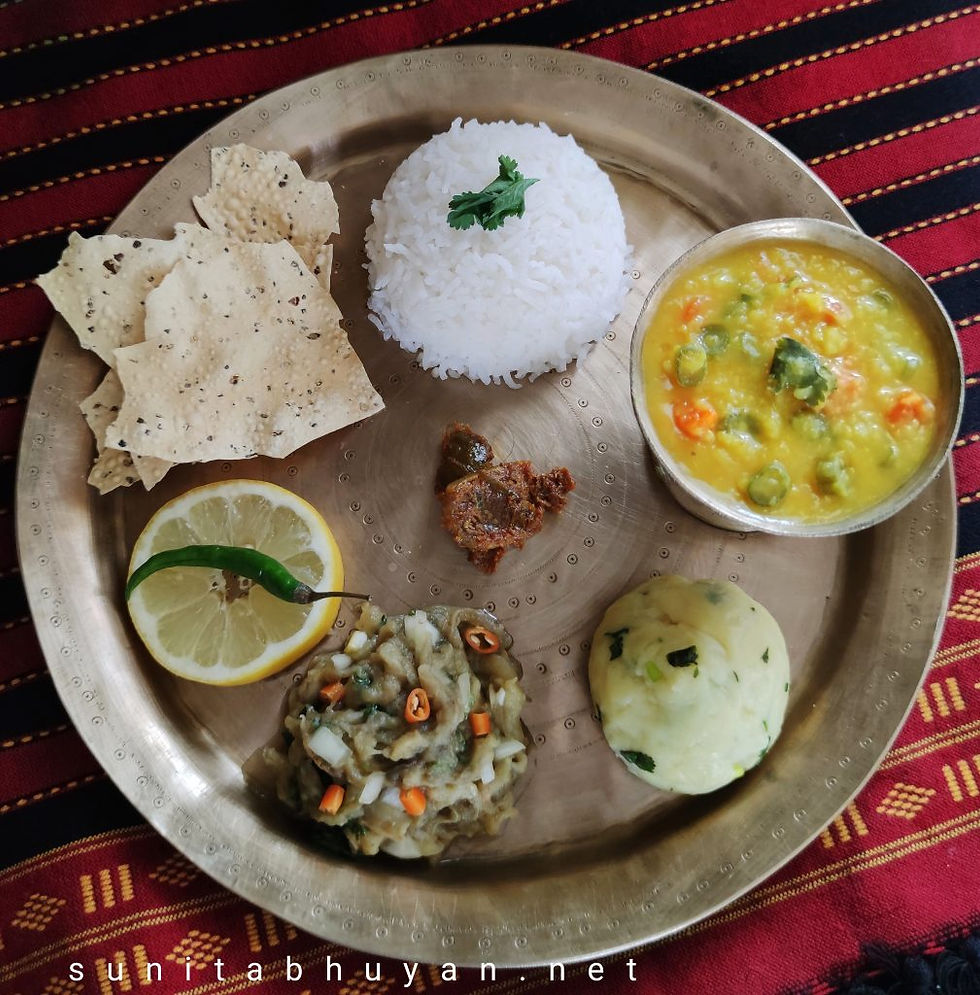
A one-pot dish where spinach, chana dal, mixed vegetables (potato, dill, onion, tomato), and aromatics cook together until everything melds into a thick, deeply green stew. Cumin and green chilli provide the heat. The dish is typically served with rice cooked together with a little fried onion (called bhuga chawal) or with simple steamed rice.
The technique is straightforward — everything in one pot, simmered until tender, lightly mashed at the end. The flavour comes from the combination, not from elaborate spicing. Naturally vegan in its traditional form and one of the most nutritionally complete one-pot dishes in Indian cooking.
15. Dal Pakwan
The Sindhi breakfast standard. Thick, lightly spiced chana dal cooked with cumin, ginger, and turmeric, served alongside pakwan — crispy deep-fried whole-wheat discs that look like papad but are denser. The dal is eaten by scooping it onto pieces of pakwan, which provides the crunch and structure.
A topping of finely chopped onion, green chilli, fresh coriander, and a squeeze of lemon goes on top. Naturally vegan. The dish is one of the more substantial Indian breakfasts — high in protein from the dal and energy-dense from the fried bread.

What These Dishes Have in Common
Three patterns hold across the West Indian regional cuisines:
Chickpea flour as structural ingredient. From Gujarati patra and khandvi to Maharashtrian pithla and thalipeeth, gram flour shows up as binder, thickener, primary protein, and standalone preparation. No other Indian region uses it as heavily.
Steaming as a primary cooking method. Gujarati cooking in particular treats steaming as the default rather than the exception. Dhokla, patra, khaman, idada — all steamed. The technique gives these dishes their distinctive light texture and naturally fits a low-oil, plant-based kitchen.
Coastal versus inland flavour profiles. The Konkan coast (coastal Maharashtra) and Goa rely on coconut, kokum, and fish-style spice profiles. The inland regions (Gujarat, Marathwada, Sindhi) rely on chickpea flour, sweet-sour-spicy balancing, and mustard tempering. The two streams meet but stay distinct.
Frequently Asked Questions
What are the most distinctive vegan dishes from West India?
West India's most distinctive vegan dishes span chickpea flour preparations (Gujarati dhokla, khandvi, patra), sprouted-bean street food (Maharashtra's misal pav, ragda pattice), coconut-and-spice coastal cooking (Goan khatkhate, mushroom xacuti, patoleo), and Sindhi one-pot dishes (sai bhaji, dal pakwan). The techniques are remarkably varied across just four states.
Is Gujarati food mostly vegan?
Gujarati food is overwhelmingly vegetarian and a significant portion is naturally vegan or one swap away from it. Dhokla, khandvi, patra, undhiyu, and most everyday Gujarati preparations rely on gram flour, vegetables, and oil rather than dairy. Sweets and certain preparations use ghee, but the underlying dish structure rarely requires it.
What is misal pav?
Misal pav is a Maharashtrian dish made from sprouted moth beans cooked into a spicy, slightly oily gravy and served with farsan (savoury crispy toppings), chopped onion, lemon, and pav (soft white bread rolls). Originally from Pune and Kolhapur, it is one of India's most distinctive street food dishes and naturally vegan if the pav is dairy-free.
What is khatkhate?
Khatkhate is a traditional Goan mixed-vegetable stew cooked with toor dal and a ground coconut-spice paste. Five to seven seasonal vegetables — drumstick, raw papaya, pumpkin, sweet potato, ash gourd — simmer together with coconut, chillies, and spices. Served on Hindu Goan festive occasions and naturally vegan in its traditional form.
Are Sindhi dishes vegan-friendly?
Many traditional Sindhi dishes are naturally vegan, especially the vegetable and lentil preparations. Sai bhaji (spinach-lentil one-pot), dal pakwan (lentils with crispy fried bread), and most Sindhi everyday cooking rely on legumes, vegetables, and oils rather than dairy. Some preparations include ghee or yoghurt, which can be replaced with neutral oil and plant yoghurt.
Where can I learn to cook West Indian vegan dishes?
The most direct path is to travel — eat these dishes where they're made. Mumbai for misal pav and street food, Ahmedabad for Gujarati thali, coastal Goa for khatkhate and xacuti, and any Sindhi household for sai bhaji. For home cooks, regional recipes are widely available online from cooks who specialise in their own traditions.
What's Next in This Series
Part one covered South India. Part two covered East and Northeast India. Part three — this one — covered West India. The series closes with part four — the Himalayan and northern plains kitchens of Uttarakhand, Kashmir, Bihar, Rajasthan, and Punjab.
West India's regional cuisines do something distinctive: they treat chickpea flour with the same respect that other cultures reserve for dairy. From the dense pithla of rural Maharashtra to the architectural khandvi of Gujarat, gram flour does the structural work that elsewhere requires cream, butter, or cheese.
These dishes are easiest to learn at the source — Mumbai's misal stalls, Surat's khamani shops, Goan home kitchens. For home cooking, regional recipes are widely available online. At The Vegan School, the foundational culinary techniques — tempering, steaming, gram-flour cookery, coconut handling — transfer cleanly to any regional Indian preparation a home cook decides to attempt.


Comments