Essential Cooking Techniques Every Vegan Cook Should Know
Updated: Aug 26
Every recipe is a sequence of techniques. Strip a dish down — past the ingredients, past the seasoning — and what remains is heat, time, knife work, and a handful of methods that show up in almost every kitchen. The recipes change. The techniques don't.
The Vegan School curriculum is built on this idea. Before any single cuisine, before any speciality module, students spend their first weeks on the techniques — the ones that decide whether a dish lands or falls flat. Below is the short list of essential cooking techniques drawn directly from the syllabus, with the reasoning behind why each one matters in a plant-based kitchen.
Kitchen Foundation: The Skills Before the Stove
Before heat enters the picture, four foundation skills decide how the cooking will go.
Mise en place — French for "everything in its place." Before cooking begins, every ingredient is measured, prepped, and within arm's reach. The reason: most kitchen mistakes are timing mistakes, not skill mistakes. Mise en place removes that variable.
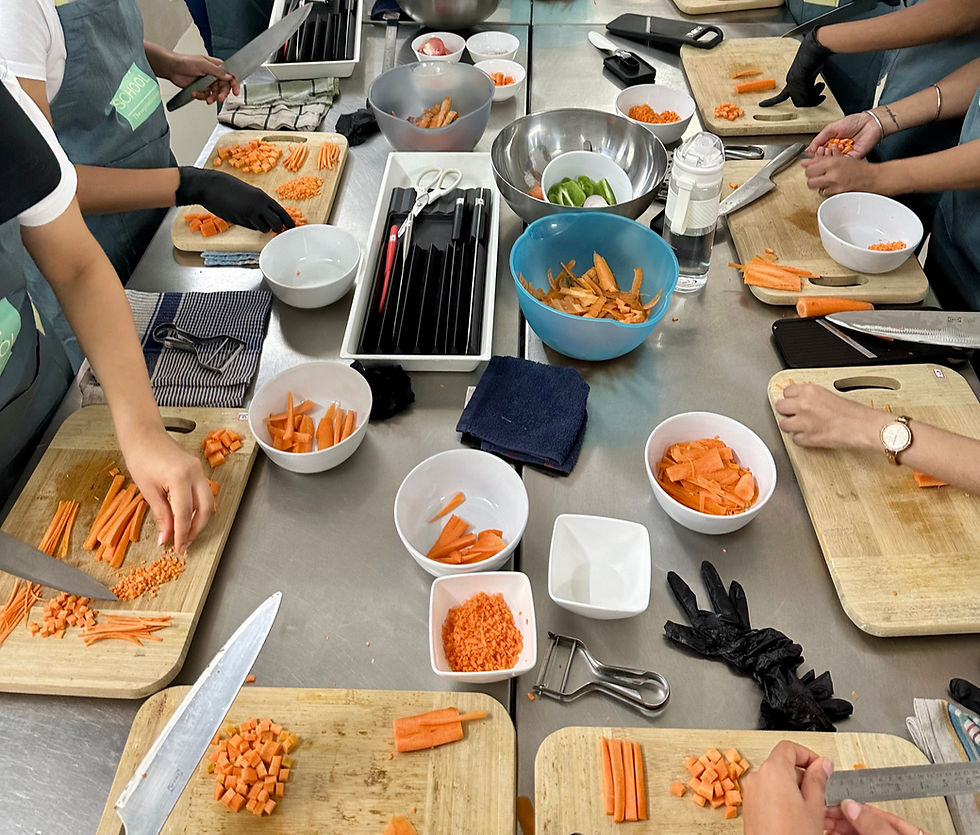
Knife cuts — A julienne (thin matchstick), a brunoise (small dice), a chiffonade (a ribbon of leafy herbs). Uniform cuts cook at the same rate, which produces even texture in the finished dish. Cut size also affects surface area, which changes how fast a vegetable releases water and absorbs seasoning.
Toasting and grinding spices — Whole spices in a hot pan release volatile oils that water-based cooking cannot reach. Once toasted, the same spices ground fresh carry several times the aroma of pre-ground supermarket equivalents. The principle: heat extracts; grinding releases.
Making stock — A vegetable stock is a flavour base, not a finished broth. Roasted onion skins, carrot tops, mushroom stems, kombu, and a small amount of fresh aromatics, simmered for 45 minutes, produce a liquid that strengthens every soup, risotto, and braise built on it.
Cooking Methods: How Heat Transforms Plants
Module 2 of the syllabus is structured around a single principle: every cooking method is a different relationship between heat, water, and time. Knowing which method fits which ingredient is most of the skill.
Blanching and Parboiling
Blanching is a brief plunge into rapidly boiling salted water — usually 30 seconds to 2 minutes — followed by an ice-water shock. The shock stops cooking instantly and locks in the vegetable's pigment. Blanched green beans stay green. Unblanched ones turn olive.
Parboiling is the same process, run longer. The vegetable is partly cooked in boiling water, then finished by another method (roasting, stir-frying). It is how restaurant kitchens produce potatoes that arrive crisp on the outside and creamy on the inside in under 8 minutes.
Sweating and Sautéing
Sweating uses low heat and a small amount of fat. The goal: soften aromatics — onion, leek, fennel — without colour. Sweated onions form the base of soups and braises, where caramel notes would distract.
Sautéing is the opposite. Higher heat, less time, deliberate browning. Cut size matters: pieces that are too large will burn before they cook through; pieces that are too small will disintegrate.
Stir-Frying
Stir-frying is sautéing's faster cousin — a wok or wide pan, fierce heat, constant motion, small uniform cuts. Three rules govern it:
The pan must be hot before the oil goes in. Smoke point matters.
Ingredients enter in order of cook time — hardest first, leafy greens last.
The pan should never crowd. Two batches will out-perform one overloaded one every time.
Caramelising
Caramelisation is a chemical reaction — sugar molecules under sustained heat breaking down into hundreds of new compounds, which produce the deep brown colour and savoury aroma of slow-cooked onions, roasted carrots, or torched sugar on a dessert. It begins around 160°C / 320°F and is one of the two reactions that give cooked food most of its complexity. (The other is the Maillard reaction — browning of proteins and starches together.)
Poaching and Steaming
Poaching cooks ingredients in a liquid held at 70–80°C / 160–180°F — under a simmer, no bubbles. The low temperature is gentle enough for delicate items, such as poached pears, poached tofu, and poached vegan dumplings.
Steaming uses water vapour rather than direct contact. Less mineral leaching, less colour loss, more retained nutrients. It is the most efficient method for preserving the texture of green vegetables.
Smoking and Preserving
Smoking infuses food with the volatile compounds of burning wood. In plant-based cooking, smoked carrots stand in for lox; smoked tofu reads as savoury and dense without any animal source.
Preserving covers pickling, salt-curing, drying, and sugar-preserving. The unifying principle: lower the water activity of the food, and the bacteria that cause spoilage can no longer thrive. Pickling and curing also build flavour over time — the longer they sit, the deeper they go.

Plating Techniques: The Final Form
Once the food is cooked, plating is what turns it into a dish. The syllabus covers five plating techniques that show up across modern restaurant menus:
Purees — vegetable solids blended with stock, oil, or plant cream until smooth, then strained. Used as a swipe across the plate or a pool under a protein.
Infused oils — herbs or aromatics blanched, blended with neutral oil, and strained through cheesecloth. The result: vivid colour, fresh aroma, and a clean dressing.
Caviar — small spheres formed by dropping a flavoured liquid containing sodium alginate into a calcium chloride bath. Yields beads that burst on the tongue. A core technique in modernist cuisine.
Tuile — a thin, brittle wafer baked from a batter of flour, sugar, and oil. Provides height and crunch on a plate.
Wine reduction — a sauce made by simmering wine with aromatics until the volume drops by two-thirds, concentrating the flavour. Strained and finished with vegan butter, it produces a glossy, deeply savoury sauce.
Fermentation: Time as a Technique
Fermentation is cooking without heat. Microbes — yeast, lactic acid bacteria, mycelium — transform food slowly, producing flavours that no stove can replicate. The Vegan School dedicates a full module to it.
The four core ferments in the syllabus:
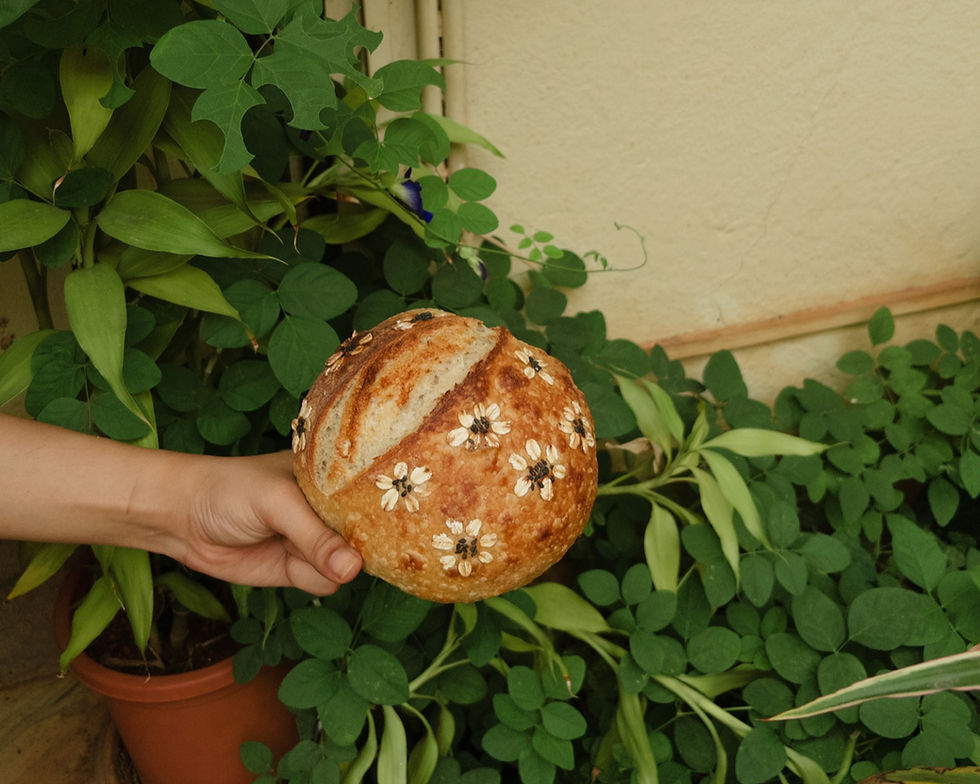
Sourdough — a wild yeast and bacterial culture that leavens bread and produces tangy, deeply flavoured loaves
Kimchi and lacto-fermented vegetables — vegetables submerged in salt brine; lactic acid bacteria preserve and transform them
Kombucha and tepache — sweetened liquids fermented by a SCOBY into low-alcohol, mildly acidic drinks
Cheese culturing — plant milks inoculated with cultures and aged to produce vegan brie, feta, and washed-rind styles
Each one runs on the same principle: the right microbe, the right environment, enough time.
Raw Gastronomy: Building Flavour Without Heat
Raw cooking sits at the other end of the spectrum from fermentation — flavour built through extraction, dehydration, and chemical reactions that happen at low temperatures.
Three core techniques define it:
Dehydration — slow drying at 40–60°C / 105–140°F over several hours. Concentrates flavour, changes texture, preserves enzyme activity.
Cold emulsions — dressings, raw cheeses, and sauces built without heat by blending fat into water-based ingredients with the help of an emulsifier (mustard, soaked nuts, lecithin).
Marinating with acid — citrus or vinegar denatures proteins and softens texture without applied heat. The basis for raw papaya salad, fruit carpaccio, and dressed zucchini noodles.
Frequently Asked Questions
What are the most essential cooking techniques to learn first?
Knife cuts, mise en place, and how to control heat — sweating, sautéing, blanching. These four show up in almost every recipe. Once they are second nature, most home cooking becomes accessible without further training.
Are vegan cooking techniques different from regular cooking techniques?
The methods are the same — heat, time, water, salt. What changes is the ingredient palette and the role each technique plays. Caramelisation matters more in plant-based cooking, for example, because it builds the savoury depth that animal fat delivers in omnivore cooking.
How long does it take to learn essential cooking techniques?
Foundational techniques can be picked up in a few weeks of daily practice. Reaching the level where they become automatic — applied without thinking — takes longer. The Vegan School programme covers the full set across 7 weeks of structured, hands-on training.
Do plant-based cooks need to learn fermentation?
Yes. Fermentation produces flavours that are hard to build any other way — the funk of aged cheese, the tang of sourdough, the depth of kimchi. It is one of the fastest-growing areas of plant-based cooking and a dedicated module in the Vegan School syllabus.
What is the difference between sautéing and stir-frying?
Sautéing uses moderate heat and lets ingredients sit briefly between stirs to allow browning. Stir-frying uses higher heat and constant motion, with all ingredients cooking together at high speed. Sautéing builds fond — the browned residue at the bottom of the pan that forms the base of pan sauces. Stir-frying produces a different texture: brighter, less browned, more aromatic.
Where These Essential Cooking Techniques Lead
A complete cook is not someone who knows a hundred recipes — it is someone who knows fifty techniques and can apply them across any ingredient.
Learn this and many more techniques at The Vegan School's 7-week course. Apply Now.


Comments